
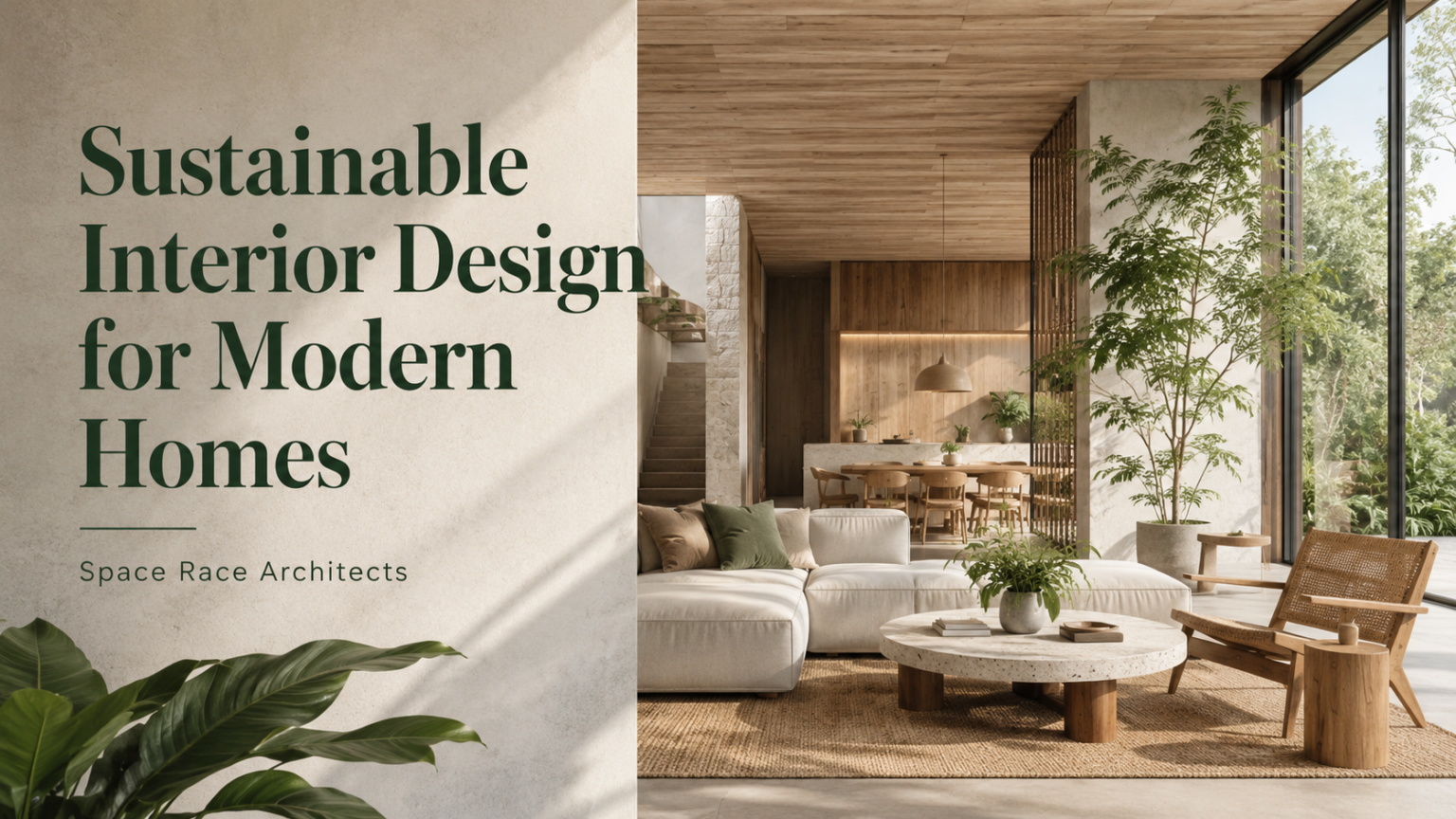
Introduction
Sustainable interior design is no longer just a “look” preference or some lifestyle trend. It has turned into a very workable way to build homes that feel better, work smarter and stay relevant for years, not only for a season. For modern homeowners, especially people planning to live somewhere for the long haul, interiors aren’t only about furniture, finishes and styling. It’s really about comfort, efficiency, material responsibility, air quality, light planning and the way each room quietly supports everyday life.
A well-made home should not create unnecessary waste, burn through too much energy or rely only on decorative upgrades to feel premium. The real worth of a space comes from how thoughtfully it is arranged. When layouts are efficient, materials are chosen with care, daylight is used properly and every element has a clear job, the place starts to feel refined without feeling overdone
This is where thoughtful design firms, like Space Race Architects, can bring a more future-ready approach. Their work shows how important planning is, how climate response matters, how usability fits in, and how long-term performance can actually be designed. Instead of treating sustainability like an add-on later, it can be woven into the earliest choices, from space layout to material selection and even the execution detailing.
In simple terms, sustainable interior design is about making interiors that are attractive, responsible, and designed for real life, with none of the extra pretending.
Why Sustainable Interiors Matter Today
Homes are basically expected to do more now than ever before. Like they have to handle work, quiet time, family moments, privacy, storage, wellness and also social stuff. At the same time, homeowners are noticing energy use more and more, plus material quality, the real costs of maintenance, and the environmental footprint.
A place that looks great on day one but later turns into something uncomfortable, annoying to upkeep, or just inefficient, is not really a good design result. Sustainable interior design tries to fix that by leaning into decisions that stay valuable even after the first pretty look fades.
That can mean durable materials, plus setting up rooms so daylight actually does the heavy lifting. It also means lowering how much you rely on artificial energy, making indoor air feel cleaner, and picking finishes that don’t look tired too quickly. And there’s another side to it, which is avoiding needless overdesign. Basically every piece should have a reason to exist, whether it’s practical, emotional or about the way the space feels.
For homeowners the payoff isn’t only environmental. It’s also budget-related and everyday-experience-related. A home that’s planned with more care can cut down maintenance, increase comfort, and help people live better, day after day.
Planning Comes Before Material Selection
One of the biggest misconceptions is that sustainability just begins with buying eco-friendly products. But honestly it starts way earlier, with planning, and not after.
Before anyone even picks finishes, furniture, or décor, the design team has to really get to know the site, the climate, the lifestyle, the circulation and how each room is used. If that groundwork is weak, you end up with dark rooms, awkward unused corners, furniture that sits wrong, and suddenly there’s more dependency on artificial cooling or lighting than there should be.
For example, a home that gets harsh sunlight without good control may demand more cooling. A room with poor ventilation can feel heavy and uncomfortable. And if the layout ignores how people actually move, the place can feel cluttered even when you use costly materials.
Space Race Architects’ design approach usually stresses that the clever planning comes first, before the visual layering even starts. That matters because sustainable decisions only truly work when the base layout is helping them along.
So good planning means things like room orientation, a natural light plan, cross-ventilation, privacy zoning, storage that is built in, and room for flexibility as future needs change. When those calls are made properly, the interiors tend to become naturally more efficient.
Choosing Materials That Last Longer
Material longevity is one of the biggest pillars of sustainable interior design, honestly. If a material looks nice at first but then you have to swap it out again and again, it is not really efficient. A smarter pick is something that works well, develops patina gracefully and still only asks for reasonable care.
When materials are durable, they also help cut waste because you’re not constantly changing things. Natural stone, responsibly sourced timber, well-made tiles, lime-based finishes, low-VOC paints and long-life textiles can all support strong interior performance, but only when they are chosen and installed properly.
That said, sustainability does not mean you must go full rustic, raw, or overly minimal. A luxury home can still feel premium and considered. The main idea is selection, not giving anything up.
For instance, rather than choosing a trendy wall finish that may look tired and dated in just two years , a more timeless textured surface can add depth and character for longer. And instead of picking delicate furniture that only photographs well, sturdy pieces can handle everyday life and keep their value.
So the point is not to make interiors look “eco-friendly” just on the surface. The point is to make responsible decisions that keep performing over time.
Natural Light as a Design Asset
Natural light is one of the most underrated tools in interior design, sort of. It changes how a space looks, feels and functions. It can make a room feel more spacious, warmer, a bit more at ease and closer to the outdoors too. It can also lessen the need for artificial lighting, especially during the daytime.
But natural light needs some kind of control. Too much of it, without any planning, can cause glare, extra heat, and general discomfort. On the other hand, too little light can make interiors seem lifeless, even sort of shut off.
Sustainable interior design uses daylight in a deliberate way. That might mean bigger openings where it’s appropriate, shaded windows, deeper reveals, sheer layers, skylights, internal courtyards, reflective finishes and even careful furniture placement—because details count.
In Indian homes, particularly where climate conditions swing a lot from one city to another, light planning can’t be taken as copy-paste. A solution that works beautifully in one region might fail in another. The overall design has to answer to location, the sun’s path, orientation and everyday lifestyle routines.
This is exactly why architecture-led interiors can have an edge. When interior design is tied to architectural thinking, natural light stops being treated like just a decorative effect and instead becomes part of the planning system.
Better Ventilation and Indoor Comfort
A sustainable home should feel comfortable without leaning too much on machines, and honestly, the air movement part is huge. When air keeps moving in the right way, it can make everything seem calmer, even if you are not adding more gadgets. Good ventilation helps cut down humidity, boosts air freshness and supports healthier living. It also helps with odour, temperature and that indoor heaviness that builds up. If ventilation is poor, even a big home can start feeling off, like the air is just stuck.
So ventilation planning isn’t only one thing; it is a bunch of small decisions that have to line up: window placement, openable sections, internal air paths, double-height spaces, courtyard connections and exhaust planning in kitchens and bathrooms. You also have to make sure furniture or partitions do not block airflow. In some cases that means moving a wall or shifting a cabinet, rather than hoping “it will be fine”.
Indoor comfort is not just about cooling. It is about how air, light, materials, and space interact together. A room with good proportions, breathable materials, and the right openings can feel naturally better, like it is breathing with you. Space Race Architects’ approach to architecture and interiors can support this kind of integrated thinking, where the home is not treated as separate rooms only but more like one connected living system, and the whole thing works as one.
Energy Efficiency Without Compromising Design
A lot of folks think energy-efficient homes must feel technical or kind of plain. But no, it doesn’t have to be. Energy efficiency can hide right inside premium interiors without messing up the whole design language, and it still looks intentional.
Things like LED lighting, high-performance appliances, smart controls, good insulation, climate-aware window treatments, and even careful ceiling planning can all help cut down energy use. Still, the real difference comes from how everything is actually put together, not just from having the features listed.
Take lighting, for instance. It shouldn’t become excessive. A premium home doesn’t need dozens of lights in every room just to “feel bright”. If you build layered lighting—ambient plus task and accent too—you get a nicer atmosphere with less waste, and honestly, it feels more natural.
Air-conditioning efficiency is similar. It improves when rooms are planned with the right openings, solid insulation, and zoning. It’s usually better to cool a smaller, well-separated area than to chill one big space that was poorly planned from the start.
In the end, sustainable interior design works best when efficiency is invisible. The resident should sense comfort and ease, not a technical chore.
Furniture That Supports Flexible Living
Modern homes need some flexibility. Not like totally strict layouts, but rooms are usually doing several jobs at once. So a guest space might turn into a study when needed. A lounge can handle work calls in daylight and then switch back to family time later, kind of without anyone thinking about it too much. And yes, a child’s room often has to keep changing as the kid grows.
That’s where furniture planning really matters. Built-in storage, modular sections, expandable tables, hidden workstations, movable partitions, and multifunctional seating – they all help interiors stay adaptable. It’s not just “nice to have”; it’s more like the practical kind of freedom.
With flexibility, you can avoid constant demolition later or those random, unnecessary remodels. When the home can quietly evolve with the family, it ends up more sustainable by default too.
Still, this doesn’t mean every single item has to be convertible. It just means that every major piece should be chosen with long-term use in mind.
For example, a sofa, dining table, wardrobe or work desk should be assessed not only for style but also for size, comfort, fit, material quality and how well it actually fits daily routines.
Reducing Waste During Execution
Sustainability also depends on, like, the actual execution. Even a well-designed plan can create waste if execution is not managed properly. Material wastage, wrong measurements, poor sequencing and repeated changes can all stack up and push costs and environmental impact up. So this is why clear drawings, defined specs and site coordination really matter, no joke
If design decisions are frozen before execution, the site process is smoother and more predictable. Contractors know what to build, suppliers know what to provide and clients have a clearer understanding of the result, not just the idea.
Execution discipline is a big part of responsible design. It cuts down the guesswork, rework, and that unnecessary consumption.
For firms like Space Race Architects, this planning-led approach can support both design quality and execution clarity. It helps make sure the project doesn’t turn into a grab bag of last-minute decisions and then sudden fixes.
Local Materials and Contextual Choices
If you use local or regionally available materials, it can reduce the transportation impact and help with a more grounded contextual approach, even if it’s not super formal. It also usually makes upkeep easier because local craftsmen and suppliers understand the material and how it behaves over time a bit more cleanly.
Things like local stone, timber alternatives, tiles, lime finishes, woven textures, and small handmade details can give a home a real sense of place. But local doesn’t automatically mean sustainable. The stuff still has to be durable, properly suited to the space, and responsibly used.
The strongest results happen when local materials are paired with contemporary detailing. That way the interior feels current while still staying connected to where it is.
Sustainable interior design shouldn’t feel like a rule you have to follow. It should feel natural to the home, to the local climate, and to the people living inside.
Healthier Paints, Finishes and Fabrics
Indoor air quality is getting to be a serious part of the design conversation. A lot of regular paints, adhesives, polish stuff and synthetic materials can let out risky chemicals into the indoor space, not just sometimes , but pretty steadily in some cases.
Using low-VOC paints, water-based finishes, breathable wall treatments, natural textiles and more responsible adhesives can help nudge the air in a better direction. These picks are extra important in bedrooms, children’s rooms, kitchens, and any area where ventilation feels a bit limited.
Soft furnishings count too; curtains, rugs, upholstery, and mattresses can influence how dust clings, how easy it is to clean, and even day-to-day comfort. Picking washable, tough materials and safer alternatives can really make the home easier to inhabit, like it just works better.
And a healthier interior does not have to feel sterile. It can stay cosy, layered and kind of luxurious. The real difference is in the standard of the choices underneath the surface, not in some cold look.
Timeless Design Reduces Renovation Cycles
Fast trends are one of the biggest reasons interiors end up looking dated quickly. If a home is designed mostly around what is popular right now, it might end up needing big visual tweaks in just a few years, and that’s kind of exhausting.
Timeless design helps break that cycle. It leans on proportion, material quality, functional clarity and refined finishing details, rather than chasing that short-lived visual drama that everyone is into for a moment.
And no, timeless design isn’t automatically boring. A home like that can still feel full of character. It just sidesteps choices that scream ‘trendy’ but don’t really hold up when you look at them over time, longer than a season.
Sustainable interior design also gains from timelessness because fewer makeovers usually mean less waste. If the home’s “bones” are solid, then smaller styling updates can refresh the space without turning it into a major renovation project.
Technology as a Support System
Smart home technology can support sustainable living if it’s used correctly, and I mean like really correctly. Automated lighting, motion detectors, climate regulation, water checking and energy tracking can help homeowners make better use of resources. But the tech shouldn’t take over the whole vibe of the place , because it can easily overpower the design. It should make everyday routines easier, not add more steps or create extra puzzles.
A smart system that works well feels intuitive. It brings comfort, safety, and efficiency together without making the home feel dependent on gadgets. The best path is to weave the technology discreetly with the bigger design plan so everything blends in and nothing screams “look at me”.
In bigger homes this matters even more. A system that is integrated well can manage lighting, temperature, and security across different areas while also lowering unnecessary consumption.
The Role of Architects in Sustainable Interiors
Sustainability can’t really be boiled down into some kind of product checklist. It takes design intelligence, you know, the sort of awareness where details matter. Architects and interior designers have to think about how the space, the structure, the services, the materials, and even day-to-day lifestyle all move together, not like separate puzzle bits.
That’s why architecture-led interior design has real value. It makes the process step past surface decoration and into deeper planning, more considered and a bit more deliberate. Like it’s not just “make it nice” but more “make it make sense”.
Space race architects can help put sustainable thinking inside a broader design responsibility. The goal isn’t only to deliver attractive rooms; it’s to build homes that are efficient, resilient, and actually aligned with how the user lives and what they need day to day.
And when sustainability is handled from the beginning, it ends up feeling seamless. The home doesn’t look like a concept that got shoved into the project. It just works better, quietly and consistently.
How Homeowners Can Start
Homeowners don’t have to make every decision all at once. The first move is to ask better questions while the design is still forming. Like, is the layout taking advantage of natural light well enough? Are the materials actually built to last? Will this finish be simple to keep clean, or does it need constant attention? Is there enough storage so things don’t end up everywhere? And can this space adapt later, as life changes? Also, are we kind of overdesigning one particular area just because we can. Are we choosing quality, or only going for visual impact?
Those questions can quietly steer the whole project in another direction without anyone realising it at first.
Sustainable interior design feels a lot more doable once homeowners stop treating it like a separate category and start seeing it as smart, everyday decision-making.
Conclusion
A future-ready home is not really made by piling on more features , more finishes or extra decorative layers. No, it’s more like you make the better choices right from the start, and then everything kind of follows.
Sustainable interior design gives homeowners a smarter route to plan spaces that feel premium, work better and remain genuinely relevant for years. It ties together daylight, airflow, resilient materials, efficient systems, healthier finishing, and that calm kind of careful execution.
For Space Race Architects , this whole mindset matches a more grounded design philosophy where homes aren’t just meant to look impressive; they also need to operate intelligently. The outcome is a home that supports everyday routines, keeps resources in mind, and keeps its long-term value.
Good interiors shouldn’t only be noticed. They should be used, kept up with ease, and lived in comfortably , day after day.
FAQ
1. What is sustainable interior design?
Sustainable interior design is the process of creating interiors that use resources responsibly, improve comfort, reduce waste and support long-term living through better planning, materials and execution.
2. Is sustainable interior design expensive?
It does not always have to be expensive. Some choices may cost more initially, but they can reduce maintenance, replacement and energy costs over time. The bigger benefit comes from smart planning.
3. Can luxury homes follow sustainable design principles?
Yes. Luxury and sustainability can work together. Premium interiors can use durable materials, better lighting, efficient systems and healthier finishes without compromising the visual outcome.
4. Why is natural light important in interiors?
Natural light improves mood, visibility, spatial comfort and energy efficiency. When controlled correctly, it reduces dependence on artificial lighting and makes interiors feel more open.
5. How can Space Race Architects help with sustainable homes?
Space Race Architects can bring architecture-led planning, contextual design thinking, material clarity and execution discipline to create homes that are functional, refined and future-ready.