
Introduction
Master of architecture is not just about creating visually impressive buildings. It is about understanding people, land, structure, function, climate, lifestyle, and long-term usability before a single wall is built. A strong architectural project begins with clarity. It asks what the space needs to do, how people will move through it, how it responds to its surroundings, and how it can remain relevant for years.
In modern architecture, design cannot depend only on appearance. A home, office, hotel, institution, or commercial space must work efficiently every day. This is where the thinking behind master of architecture becomes valuable. It brings together design intelligence, technical understanding, spatial planning, and execution awareness.
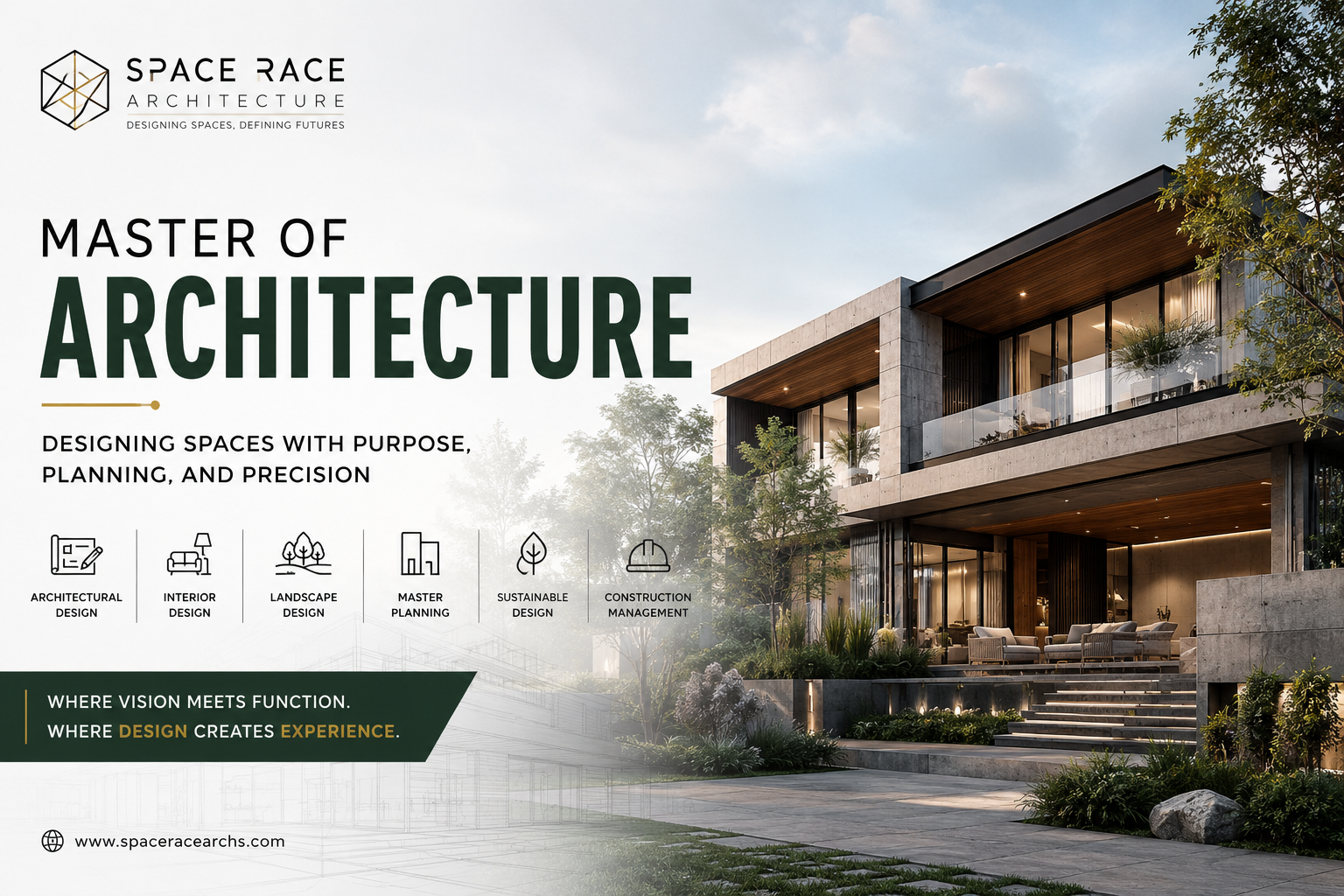
For a practice like space race architecture, this approach becomes especially important because architecture is not treated as a surface-level exercise. The focus is on planning, structure, interiors, landscape, sustainability, and construction coordination working together from the beginning. This kind of integrated approach creates spaces that are not only beautiful but also functional, buildable, and future-ready.
Understanding the Meaning of Master of Architecture
The term master of architecture can be understood in two ways. Academically, it refers to advanced architectural education. Practically, it also represents a deeper level of architectural thinking where design decisions are made with technical clarity and long-term vision.
In real-world projects, this thinking matters more than ever. Clients today are not only asking for attractive spaces. They want homes that support their lifestyle, offices that improve productivity, hospitality spaces that create memorable experiences, and institutions that function smoothly at scale.
A master of architecture approach studies the project from multiple angles. It looks at the site, climate, client brief, circulation, natural light, zoning, services, materials, structural feasibility, and execution process. Instead of treating architecture as a final visual output, it treats architecture as a complete system.
This is the difference between a space that only looks good and a space that performs well.
Why Architectural Planning Comes Before Design
Many people assume that architecture starts with elevation design, façade style, or interior mood boards. In reality, strong architecture starts much earlier. It begins with planning.
Planning defines how the entire project will function. It decides where the entrance should be, how private and public spaces will be separated, how natural light will enter, how people will move, how services will run, and how the building will respond to the site.
A master of architecture mindset gives planning the importance it deserves. If the planning is weak, even the best materials or expensive finishes cannot fix the project later. Poor circulation, awkward room sizes, dark corners, badly placed services, and inefficient zoning can create long-term problems.
This is why experienced architects spend time understanding the site and client requirements before moving into visual design. At space race architecture, the design process is built around clarity, planning, and execution alignment. That makes the project stronger from concept to completion.
Architecture Is More Than Aesthetic Design
Aesthetic design is important, but it cannot be the only priority. A building must also be practical, comfortable, safe, and efficient. The real value of architecture lies in its ability to balance beauty with function.
For example, a luxury residence may need grand spaces, but it also needs privacy, service access, storage, ventilation, security, and daily usability. A commercial office may need an impressive reception area, but it also needs productive work zones, meeting rooms, acoustic comfort, and smooth circulation. A hospitality project may need visual impact, but it also depends on guest flow, back-end services, maintenance planning, and operational efficiency.
The master of architecture approach brings all these factors together. It ensures that design decisions are not random. Every wall, opening, pathway, material, and detail should support the larger purpose of the project.
This is where space race architecture creates a stronger design value. By combining architecture, interiors, landscape, sustainable planning, and construction management, the project is not handled in disconnected parts. It is treated as one complete design ecosystem.
The Role of Site Understanding in Architecture
Every site has its own character. The size, orientation, surroundings, road access, climate, views, soil, regulations, and neighboring structures all influence the final design. A good architect does not force a standard template onto every site. Instead, the design grows from the site conditions.
Master of architecture thinking begins with observation. How does sunlight move through the site? Where does wind come from? Which views should be captured? Which sides require privacy? Where should the main entry be placed? How can the building reduce heat gain? How can landscape improve the user experience?
These questions shape better architecture.
In residential projects, site understanding can improve comfort and privacy. In commercial projects, it can improve visibility and access. In institutional and hospitality projects, it can improve movement, zoning, and long-term operational flow.
This is why site study is not a formality. It is one of the most important stages of architectural design.
Integrated Architecture and Interior Design
One common mistake in many projects is treating architecture and interiors as separate stages. The building is designed first, and interiors are forced into it later. This often creates conflicts in ceiling heights, lighting placement, furniture layout, service lines, storage, and user comfort.
A better approach is to plan architecture and interiors together.
The master of architecture mindset supports this integration. It understands that interior experience begins with architectural planning. Room proportions, window placement, natural light, circulation, wall alignment, and ceiling planning all affect the final interior outcome.
At space race architecture, architecture and interior design are approached together so that the spatial planning and interior detailing support each other. This creates a more cohesive result. The exterior, interior, structure, and function do not feel disconnected. They feel like one complete design language.
For clients, this means fewer execution issues, better design clarity, and a more refined final space.
Master Planning for Larger Projects
For larger sites and multi-use developments, individual building design is not enough. These projects require master planning.
Master planning looks at the larger framework of the site. It defines land use, movement, access points, open spaces, built zones, service zones, parking, landscape, infrastructure, and future expansion. Without proper master planning, large projects can become chaotic and inefficient.
A master of architecture approach becomes extremely useful here because it connects vision with buildability. It does not only ask what the project should look like. It asks how the entire site will function over time.
For residential communities, master planning affects privacy, amenities, green areas, road networks, and lifestyle quality. For institutional projects, it affects student or visitor movement, safety, expansion, and maintenance. For hospitality projects, it affects guest arrival, service circulation, public areas, private zones, and operational efficiency.
This level of planning is strategic. It creates order before design details begin.
Sustainable and Future-Ready Architecture
Sustainability is no longer an optional design feature. It is a necessary part of responsible architecture. Buildings consume energy, water, materials, and land. Good architecture must reduce waste and improve performance wherever possible.
Master of architecture thinking supports sustainability from the early stages. Instead of adding green features at the end, it uses passive design strategies, energy-conscious planning, efficient orientation, natural ventilation, daylight optimization, responsible material choices, and smart resource management.
A sustainable building is not just better for the environment. It is also better for the people using it. It can reduce heat, improve comfort, lower operational costs, and create healthier spaces.
Space race architecture includes sustainable and eco-conscious design as part of its service approach, making it relevant for clients who want spaces that are not only premium but also practical for the future.
Construction Management and Execution Control
Even the best design can fail if execution is not controlled properly. Drawings, materials, site coordination, contractor communication, timelines, budgets, and quality checks all influence the final result.
This is why construction management is a critical part of the architectural process. It ensures that the approved design is translated correctly on site. It also reduces confusion between the client, architect, contractors, vendors, and consultants.
A master of architecture approach understands execution from the beginning. It does not create concepts that look good only on paper. It considers structural feasibility, material availability, cost implications, construction sequence, and maintenance requirements.
At space race architecture, construction management supports design accountability. The goal is not only to create a concept, but to ensure that the project is executed with clarity and quality.
Why Clients Need Professional Architectural Expertise
Hiring a professional architecture firm is not just about getting drawings. It is about making better decisions before construction begins.
A professional architect helps clients avoid costly mistakes. They identify planning issues early, improve spatial efficiency, guide material decisions, coordinate technical requirements, and align the project with local regulations and execution needs.
This is especially important for clients planning homes, offices, hotels, institutions, or large commercial spaces. These projects involve major investment. A poorly planned project can lead to repeated changes, cost overruns, delays, and long-term dissatisfaction.
With a master of architecture approach, the design process becomes more structured. The client gets clarity before commitment. The architect brings creative thinking, technical knowledge, and execution awareness into one process.
Space Race Architecture and the Value of Design Clarity
Space race architecture represents the kind of architectural practice where design is not treated as decoration. It is treated as a complete planning and execution responsibility. The firm’s work across architectural design, interior design, landscape design, master planning, sustainable design, and construction management reflects this integrated direction.
This matters because today’s clients need more than style. They need guidance. They need someone who can understand the site, decode the brief, plan the structure, shape the experience, coordinate execution, and protect the design intent until completion.
That is the real value of architecture.
A master of architecture approach helps create spaces that feel intentional, not accidental. Every decision has a reason. Every area has a purpose. Every detail contributes to the larger experience.
Conclusion
Master of architecture is about disciplined design thinking. It is about planning before styling, clarity before execution, and long-term value before short-term visual impact. Whether the project is a home, office, hotel, institution, or large development, strong architecture begins with understanding how the space should function, feel, and perform.
For clients looking to create spaces with purpose, precision, and future-readiness, working with a firm like space race architecture can bring structure to the entire journey. From architectural design and interiors to master planning, sustainability, and construction coordination, the right architectural approach transforms an idea into a well-built reality.
Good architecture does not happen by chance. It is planned, tested, refined, and executed with clarity. That is what separates an ordinary building from a meaningful space.