
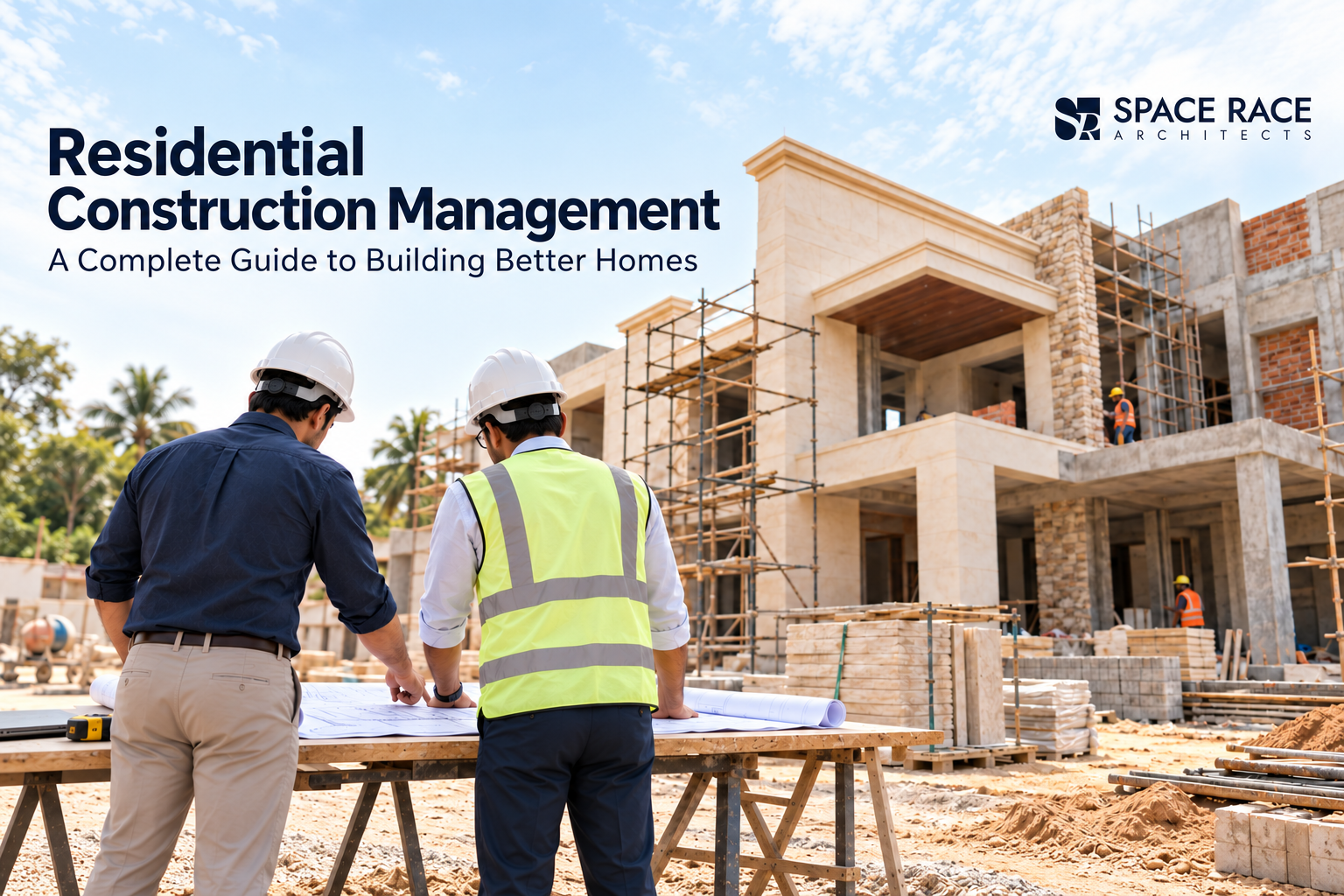
Building a home is one of the most important investments a person can make. From selecting the right design to coordinating contractors, managing materials, monitoring workmanship, and completing the final details, residential construction involves many interconnected activities. Without proper planning and coordination, even a well-designed home can experience delays, budget problems, quality issues, and unnecessary stress. This is where Residential Construction Management becomes an important part of the building process.
Residential construction management is the organized process of planning, coordinating, supervising, and controlling the construction of a residential property from the initial stages through final completion. It brings together architects, contractors, consultants, vendors, site teams, and homeowners so that everyone works toward the same project goals. Effective management helps transform architectural drawings and design concepts into a completed home while maintaining attention to quality, cost, time, and construction standards.
At Space Race Architects, construction management is approached with an emphasis on efficient project execution, coordination, quality control, and accountability. The process can include planning and budgeting, contractor coordination, site supervision, quality monitoring, project delivery, and handover. This integrated approach helps ensure that design intent is translated accurately into the finished space.
What Is Residential Construction Management?
Residential construction management is the professional coordination of the different activities involved in constructing a house, villa, apartment, or other residential property. It begins before construction starts and continues through execution, inspections, finishing, and handover.
A residential construction manager or construction-management team helps organize the relationship between the homeowner, architect, contractor, consultants, suppliers, and workers. Instead of leaving individual teams to work independently, construction management creates a structured process in which responsibilities, schedules, materials, quality expectations, and project requirements are coordinated.
The goal is not simply to complete construction. The goal is to complete the project according to the approved design, expected quality, planned budget, and required timeline. This makes residential construction management particularly valuable for homeowners who want greater visibility and control throughout the building process.
Why Residential Construction Management Matters
A residential project can involve hundreds of decisions. These may include structural work, electrical systems, plumbing, flooring, doors and windows, kitchen installations, bathrooms, lighting, painting, exterior finishes, landscaping, and many other details. A problem in one area can affect several other activities.
For example, if electrical conduits are not coordinated with the architectural layout before plastering, changes may become expensive and disruptive later. Similarly, if materials are not ordered according to the construction schedule, work may stop while the site waits for deliveries.
Professional residential construction management helps identify these issues before they become larger problems. Planning, communication, monitoring, and documentation allow decisions to be made at the right time rather than after construction has already progressed.
A well-managed project also provides homeowners with greater confidence because construction activities are monitored systematically instead of relying entirely on informal communication.
Planning the Residential Construction Project
Successful construction begins with proper planning. Before workers arrive at the site, the project needs a clear understanding of its scope, design, budget, materials, timeline, and execution requirements.
The architectural drawings provide the foundation for the project, but construction management connects those drawings to real-world execution. The team needs to understand the sequence of construction activities and determine how different trades will work together.
Planning may involve reviewing drawings, establishing project milestones, preparing cost expectations, coordinating contractors, identifying material requirements, and developing a practical construction schedule.
At Space Race Architects, planning and budgeting form an important part of construction management, helping establish project scope, timelines, and cost estimates before execution progresses.
Budget Management and Cost Control
Budget control is one of the most important responsibilities in residential construction management. Homeowners usually begin with a defined investment range, but construction costs can increase when decisions are delayed, materials are changed without planning, quantities are underestimated, or additional work is introduced during construction.
Effective cost management starts with understanding the project requirements and creating a realistic framework for expenses. It also requires monitoring changes throughout construction.
A construction-management approach can help homeowners understand where their money is being spent and how individual decisions may affect the overall project. Material selections, construction methods, design changes, and additional requirements should be considered carefully before they are implemented.
Good cost control does not necessarily mean choosing the cheapest materials or reducing important design elements. Instead, it means making informed decisions that balance quality, performance, appearance, durability, and budget.
Contractor and Vendor Coordination
Residential projects often involve multiple contractors and vendors. Civil contractors, structural teams, electricians, plumbers, carpenters, painters, fabricators, flooring teams, landscape contractors, and other specialists may all become involved at different stages.
Without coordination, one contractor’s work can interfere with another contractor’s progress. For example, flooring cannot always be completed before necessary plumbing and electrical work has been properly addressed. Similarly, false ceilings, lighting, air-conditioning systems, and interior finishes need to be coordinated carefully.
Residential construction management creates a communication structure between the different teams. Responsibilities can be clarified, activities can be scheduled, and site requirements can be communicated more efficiently.
Space Race Architects highlights contractor, vendor, and consultant coordination as part of its construction-management service to support smoother communication and workflow.
Site Supervision and Quality Control
Drawings and specifications establish what should be constructed, but site supervision helps ensure that the intended work is actually carried out correctly.
Regular site inspections can identify construction issues while they are still manageable. Workmanship, dimensions, materials, finishes, installation methods, and compliance with design specifications can be reviewed during different stages of construction.
Quality control is especially important because correcting an issue after the next layer of construction has been completed can be more difficult and expensive. For instance, identifying a problem with waterproofing before flooring is installed is considerably easier than discovering it after the finished floor has been completed.
Site supervision therefore works as an ongoing quality-checking process rather than a single inspection at the end of the project. Space Race Architects describes regular site inspections as part of maintaining construction quality and adherence to design specifications.
Managing the Construction Timeline
Time is another major factor in residential construction. Homeowners may have specific completion expectations because of relocation plans, rental commitments, financial arrangements, or personal schedules.
Construction delays can occur for many reasons, including material shortages, contractor availability, design changes, weather, site conditions, coordination problems, or decisions that were not finalized on time.
Residential construction management helps create a sequence for the project so that activities can be coordinated logically. The objective is not simply to rush construction but to ensure that each stage is completed appropriately before dependent activities begin.
A realistic timeline should also allow for inspections, corrections, material procurement, finishing work, and final handover. Proper scheduling can reduce unnecessary downtime and improve overall project efficiency.
Translating Architectural Design Into Reality
One of the biggest advantages of combining architecture with construction management is better continuity between design and execution.
An architectural design may contain specific spatial relationships, materials, proportions, details, and functional requirements. If construction is handled without sufficient understanding of the design intent, important elements may be changed or compromised during execution.
Construction management helps maintain communication between the design team and the construction team. When questions arise on site, they can be addressed with reference to the design rather than being solved through assumptions.
This becomes particularly important in customized homes where architectural detailing, interiors, lighting, materials, and built-in elements are closely connected.
Material Selection and Procurement
Materials have a direct impact on the appearance, durability, maintenance, and performance of a home. Residential construction management can help coordinate when materials are required and ensure that procurement aligns with the construction schedule.
Materials should not only be selected based on appearance. Their suitability for the application, expected performance, installation requirements, maintenance, availability, and budget should also be considered.
Ordering materials too early may create storage problems, while ordering them too late can delay construction. Coordinating procurement with the project timeline can therefore make the construction process more efficient.
Managing Design Changes During Construction
Design changes are common in residential projects. Homeowners may reconsider a material, modify a room, change a fixture, or introduce a new requirement after construction has started.
While some changes are unavoidable, unplanned modifications can affect cost, schedule, materials, and other construction activities.
Residential construction management provides a structured way to evaluate these changes. Before implementing a modification, the team can consider how it affects the existing design, construction sequence, budget, and completion date.
This approach helps homeowners make decisions with a clearer understanding of their consequences.
Communication With Homeowners
Communication is a fundamental part of successful residential construction management. Homeowners want to know what is happening at their property, what decisions need to be made, whether construction is progressing according to schedule, and whether any issues require attention.
Clear communication reduces uncertainty. It also gives homeowners an opportunity to make informed decisions before a problem becomes difficult to correct.
A professional construction-management process can establish regular communication between the homeowner, architect, contractors, and other project participants. This creates greater accountability and makes it easier to track progress.
Safety and Responsible Site Practices
Construction sites involve physical risks, equipment, tools, materials, and multiple workers operating within the same environment. Responsible site management therefore requires attention to safe working practices and appropriate coordination.
A well-organized site can reduce unnecessary hazards by maintaining clearer work areas, coordinating activities, and ensuring that construction teams understand their responsibilities.
Safety should not be treated as an afterthought. It should be considered throughout planning and execution.
Quality Over Short-Term Savings
One of the most important principles of residential construction management is understanding the difference between reducing cost and reducing value.
Choosing a cheaper option may sometimes reduce the initial expense, but if the material has poor durability or requires frequent replacement, the long-term cost may be higher.
A well-managed residential project considers the entire life cycle of the home. Construction decisions should balance initial investment with durability, functionality, maintenance, and long-term performance.
This approach is particularly relevant for homes intended to serve families for many years.
Final Inspection and Project Handover
The final stage of construction is more than simply handing over the keys. Before completion, the property should be reviewed carefully to identify incomplete work, defects, finishing issues, or items that require correction.
Final inspections provide an opportunity to check the quality of completed work and prepare a punch list of remaining tasks. Contractors can then address outstanding issues before the project is formally handed over.
Space Race Architects includes final inspections, timely completion, and smooth handover within its construction-management approach.
A structured handover gives homeowners greater confidence that the completed property has been reviewed rather than simply declared finished.
Benefits of Professional Residential Construction Management
Professional residential construction management can provide several benefits throughout the building process. It can improve coordination between contractors, help maintain construction quality, support budget monitoring, reduce avoidable delays, and provide homeowners with a clearer understanding of project progress.
It also creates accountability. When different teams know their responsibilities and communication channels are established, it becomes easier to identify and resolve problems.
Most importantly, professional management allows homeowners to focus on making important design and lifestyle decisions while experienced professionals coordinate the technical and execution-related aspects of the project.
Choosing the Right Residential Construction Management Team
Selecting the right team is an important decision because construction management directly influences how smoothly a project progresses.
Homeowners should look for professionals who understand architecture, construction processes, site coordination, quality control, scheduling, and communication. Experience with residential projects can also be valuable because homes require attention to both technical construction requirements and everyday lifestyle considerations.
A good team should be able to communicate clearly, identify potential issues early, coordinate different contractors, and maintain consistency between the approved design and the finished property.
It is also important to understand the scope of construction-management services before starting the project. Clear responsibilities help avoid confusion later and establish realistic expectations for everyone involved.
Why Integrated Construction Management Can Make a Difference
Architecture and construction are closely connected. A beautiful design can lose its intended quality if construction is poorly coordinated, while effective construction management becomes more valuable when the team understands the design from the beginning.
An integrated approach allows design decisions and construction realities to be considered together. Materials, detailing, spatial planning, services, execution, and finishing can be coordinated rather than treated as completely separate activities.
For homeowners, this can result in a more organized experience and a stronger connection between what was designed and what is ultimately built.
Conclusion: Building With Greater Clarity and Control
A home is not created through architectural drawings alone. It is created through hundreds of decisions, coordinated activities, skilled workmanship, careful material selection, and consistent quality control. Residential Construction Management brings these elements together into an organized construction process.
From planning and budgeting to contractor coordination, site supervision, quality control, scheduling, material procurement, and final handover, effective management helps keep the project moving toward its intended outcome. It can reduce confusion, improve communication, identify problems earlier, and help protect the quality of the finished home.
For homeowners planning a new residence, villa, renovation, or customized residential project, construction management can provide the structure and accountability needed to move from concept to completion with greater confidence.
Space Race Architects approaches construction management with a focus on coordination, quality, transparency, and efficient project execution. Its construction-management service covers planning and budgeting, contractor coordination, site supervision, quality control, project delivery, and handover, helping connect the design process with practical construction execution.
When a residential project is carefully planned and professionally managed, the result is not simply a completed building. It is a home where design, functionality, quality, and long-term value come together.