
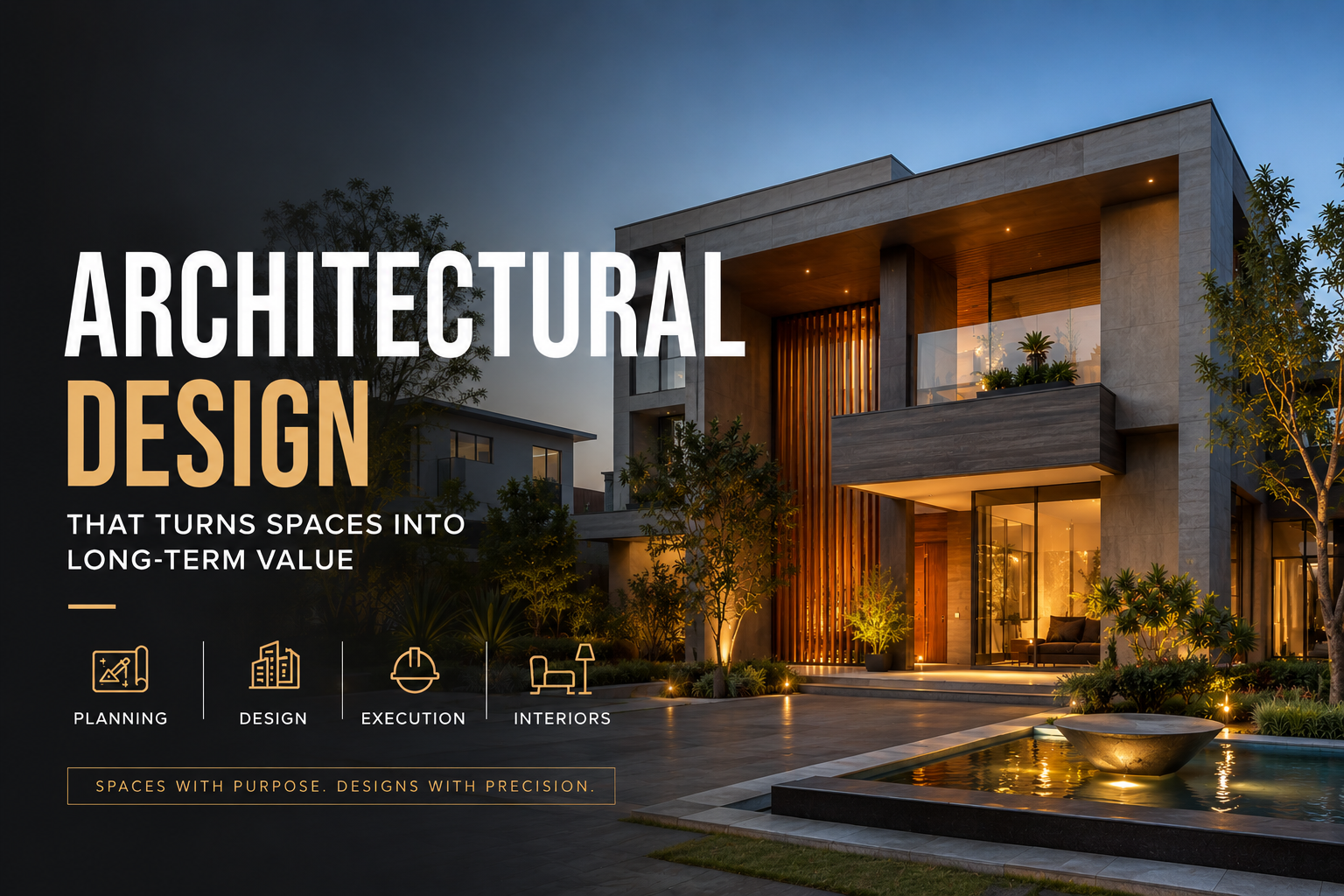
Architectural design is not just about creating a good-looking building. It is the strategic process of shaping a space so that it works structurally, functionally, emotionally, and aesthetically for years. A well-designed building does not happen by chance. It comes from clear planning, site understanding, technical accuracy, material awareness, and execution control.
For any residential, hospitality, institutional, commercial, or workplace project, the design stage decides the long-term quality of the space. It defines how people move, how light enters, how rooms connect, how the structure performs, how costs are managed, and how the final building feels once it is occupied.
This is where architectural design becomes a serious investment. It is not just the first step before construction. It is the foundation of everything that follows.
At Space Race Architects, the focus is on creating spaces with purpose, precision, and long-term relevance. The studio approaches architecture through planning, structure, interiors, sustainability, and execution coordination so that the final built space is not only visually strong but also practical, efficient, and buildable.
What Is Architectural Design?
Architectural design is the complete process of converting an idea, requirement, or site into a functional built environment. It includes concept development, space planning, zoning, circulation, structural coordination, elevation design, technical drawings, material direction, visualisation, and construction support.
Many people think architectural design starts with a façade or a 3D view. In reality, it starts much earlier. It begins with questions like the following:
What is the purpose of the space?
Who will use it?
How should people move through it?
What does the site allow?
What are the climate conditions?
What budget needs to be respected?
What regulations apply?
How should the space perform over time?
A strong architectural design answers these questions before construction begins. It reduces confusion, improves decision-making, and helps avoid expensive changes during execution.
Why Architectural Design Matters Before Construction
Construction without proper architectural design often leads to delays, rework, poor space utilisation, weak detailing, and cost overruns. A building may look attractive from the outside but fail in day-to-day use if the planning is not resolved properly.
For example, a home may have large rooms but poor circulation. A hotel may have a striking lobby but inefficient back-end service movement. A workplace may look modern but lack acoustic comfort, natural light, or practical zoning. These issues are not construction problems. They are design-stage problems.
Good architectural design brings clarity before money is spent on site. It allows the client, architect, engineers, and contractors to work from the same direction. Every drawing, layout, elevation, and detail becomes part of a larger plan.
Space Race Architects follows this integrated approach by looking at design not as decoration, but as a system. The space must look good, function well, follow regulations, support the structure, and remain usable over time.
The Role of Site Understanding
Every project starts with the site. A good architect does not impose a design blindly. The site must be studied in terms of orientation, access, surrounding context, sunlight, wind movement, road width, privacy, views, soil conditions, local regulations, and future expansion possibilities.
Architectural design becomes more effective when it responds to the site instead of fighting it.
For a residence, this may mean placing common areas where natural light is strongest. For a hotel, it may mean planning guest movement and service circulation separately. For an institution, it may mean creating open zones that support learning, interaction, and safety. For a commercial project, it may mean maximising visibility, access, and operational efficiency.
Site-responsive design also helps create buildings that feel grounded. They do not look like copied templates. They belong to their location.
Space Planning: The Backbone of Every Project
Space planning is one of the most important parts of architectural design. It decides how every area connects and performs. Without strong space planning, even expensive finishes cannot save a project.
In residential architecture, planning decides privacy, family interaction, storage, natural ventilation, and daily comfort. In commercial architecture, it decides customer movement, staff efficiency, brand experience, and revenue potential. In hospitality design, it affects guest experience, service flow, maintenance, and operational control.
A good layout is not just about fitting rooms into an area. It is about creating a logical flow. The movement should feel natural. The proportions should feel balanced. The relationship between public, semi-private, and private areas should be clear.
At Space Race Architects, planning is treated as a technical and creative exercise. The goal is to make every square foot purposeful. This is especially important in premium projects where space must feel open, refined, and efficient at the same time.
Architectural Design and Structural Clarity
A building must not only look impressive. It must also stand with structural logic. When architecture and structure are not aligned, the project can face design compromises, unnecessary costs, and execution challenges.
Structural clarity means the architect thinks about columns, beams, spans, levels, load transfer, and services from the early design stage. This does not mean limiting creativity. It means giving creativity a buildable framework.
A bold façade, a double-height space, a cantilevered balcony, or a large open hall can all be achieved when the architectural design is coordinated with engineering realities.
This coordination is where experienced architectural studios create real value. They do not just design for presentation. They design for execution.
Bringing Architecture and Interiors Together
A common mistake in many projects is treating architecture and interiors as two separate stages. First the building is made; then interiors are forced into it. This often results in awkward ceiling levels, poor lighting placement, furniture that does not align with walls, and services that interrupt the design.
The better approach is to integrate architecture and interiors from the beginning.
When the interior experience is considered during architectural design, the outcome is more cohesive. Window placement supports furniture layouts. Ceiling design works with lighting. Wall thickness supports storage. Staircases become design features. Courtyards, balconies, and terraces become usable extensions of the interior.
Space Race Architects follows this integrated thinking by bringing architecture and interior planning together. This helps create spaces where the outer form and inner experience feel connected rather than disconnected.
Designing Homes That Support Real Living
Residential architectural design must go beyond luxury visuals. A home has to support everyday life. It must understand the family’s lifestyle, routines, privacy needs, storage requirements, cultural habits, and future growth.
A well-designed home creates balance between openness and privacy. It allows natural light without compromising comfort. It gives the family shared spaces but also personal corners. It makes movement easy and keeps maintenance practical.
In Indian homes, this becomes even more important because residences often need to support multi-generational living, festive gatherings, staff movement, Vaastu preferences, climate control, and long-term family expansion.
Good architectural design does not copy trends blindly. It interprets the client’s lifestyle and translates it into a building that feels personal, efficient, and timeless.
Designing Hospitality and Commercial Spaces
In hospitality and commercial projects, architectural design directly affects business performance. A hotel, restaurant, office, showroom, or institutional building must be planned for both experience and operations.
For hospitality projects, guest arrival, lobby impact, room efficiency, service movement, back-of-house planning, circulation, lighting, and maintenance access are critical. The space must feel memorable while still working smoothly behind the scenes.
For commercial and workplace projects, the focus shifts to visibility, productivity, brand identity, flexibility, user comfort, and long-term adaptability. The design must make business sense.
This is why architectural design for commercial spaces needs more than aesthetics. It needs operational understanding. Every design decision must support how the space will be used, managed, and experienced.
Technical Drawings and Visualization
A concept becomes useful only when it is translated into clear drawings and documentation. Technical drawings are the language through which design reaches the construction site.
They include plans, elevations, sections, working drawings, structural coordination, service drawings, door-window schedules, material specifications, and detail drawings. These documents reduce ambiguity and allow contractors to execute the design accurately.
Visualisation also plays an important role. 3D views, models, and renders help clients understand the design before construction begins. They make decision-making easier and reduce the chances of last-minute changes.
At Space Race Architects, architectural design is supported by technical drawings and visualisation so that the design intent is communicated clearly before execution starts.
Sustainable Design and Future-Ready Spaces
Sustainability is no longer an optional design feature. It is a necessary part of responsible architectural design. A building should use resources wisely, reduce heat gain where possible, improve natural ventilation, optimise daylight, and support long-term energy efficiency.
Sustainable design does not always mean adding expensive technology. It often starts with basic but intelligent decisions: correct orientation, shaded openings, efficient planning, durable materials, proper insulation, landscape integration, and water-conscious design.
Future-ready spaces are also flexible. They can adapt to changing lifestyles, business needs, technology upgrades, and family structures. A building designed only for today may become outdated quickly. A well-planned building can evolve.
Space Race Architects includes sustainable and eco-conscious thinking as part of its broader design approach, helping projects become more efficient, responsible, and long-lasting.
Execution Coordination: Where Design Meets Reality
The success of architectural design depends heavily on execution. Even the best concept can fail if the site work is not coordinated properly.
Execution coordination involves consultant alignment, contractor communication, material checks, site visits, quality review, timeline monitoring, and solving on-site issues. It ensures that what was designed on paper is built with accuracy.
This stage requires accountability. The architect’s role does not end after drawings are handed over. Design decisions often need to be clarified, refined, or protected during construction.
For clients, this reduces stress. For contractors, it improves clarity. For the project, it improves final quality.
Why Choose Space Race Architects for Architectural Design?
Choosing the right architectural partner is not only about style. It is about process, technical maturity, execution understanding, and the ability to translate vision into a buildable reality.
Space Race Architects brings together architectural planning, interior thinking, landscape response, sustainable design, and construction coordination. This makes the design process more complete and controlled.
The studio works across different project types, including homes, hotels, institutions, workplaces, commercial spaces, and public buildings. This cross-sector experience helps bring a broader understanding of space, function, and user behaviour.
For clients looking for architectural design that is both creative and practical, this integrated approach creates better outcomes. The design is not treated as a surface-level visual exercise. It is developed as a complete spatial strategy.
Common Mistakes to Avoid in Architectural Design
One major mistake is starting construction too early without finalizing drawings. This often leads to confusion, site delays, and cost escalation.
Another mistake is prioritizing façade design over planning. A building should not only look impressive from outside. It should work well from inside.
Clients also sometimes choose materials and finishes before understanding the design language. This can make the final result look inconsistent.
Ignoring climate is another issue. Large glass surfaces, poor shading, weak ventilation, and wrong orientation can increase heat and energy costs.
The biggest mistake is treating architectural design as an expense instead of an investment. A good design saves money by reducing rework, improving usability, and increasing long-term value.
The Future of Architectural Design
The future of architectural design will be more integrated, performance-driven, and human-focused. Buildings will need to be smarter, more sustainable, more flexible, and more responsive to how people actually live and work.
Clients are no longer looking only for beautiful spaces. They want spaces that are efficient, healthy, future-ready, and emotionally connected. They want homes that support lifestyle, offices that improve productivity, hotels that create experience, and institutions that inspire learning.
This shift demands architects who can think beyond form. It requires design teams who understand planning, structure, interiors, sustainability, technology, and execution as one connected process.
Space Race Architects is positioned around this kind of integrated thinking. The studio’s approach reflects a clear belief that architecture should not be disconnected from life. It should shape how people move, gather, rest, work, and experience space every day.
Conclusion
Architectural design is the foundation of every successful building. It decides how a project looks, functions, performs, and lasts. From site study and space planning to structural coordination, technical drawings, sustainability, interiors, and execution, every stage matters.
A strong design process creates clarity before construction begins. It improves efficiency, reduces mistakes, and gives the final space a stronger identity.
For homeowners, business owners, developers, institutions, and hospitality brands, investing in the right architectural design partner is a strategic decision. It affects comfort, value, operations, and long-term satisfaction.
Space Race Architects brings a precise, integrated, and execution-focused approach to architectural design. The result is architecture that is not only visually distinct but also practical, responsive, and built for long-term use.
FAQs
1. What is architectural design?
Architectural design is the process of planning and developing a building’s layout, structure, form, function, materials, and technical details before construction begins.
2. Why is architectural design important?
It helps create spaces that are functional, efficient, safe, visually strong, and aligned with the client’s needs. It also reduces construction errors and unnecessary costs.
3. Does Space Race Architects provide architectural design for homes?
Yes, Space Race Architects works on residential architecture along with hospitality, commercial, institutional, workplace, and public building projects.
4. What is included in architectural design services?
Architectural design can include consultation, concept development, space planning, drawings, 3D visualization, technical documentation, material direction, and site coordination.
5. How does architectural design improve long-term value?
Good design improves usability, structural clarity, energy efficiency, spatial quality, and execution accuracy. This increases the long-term performance and value of the building.