
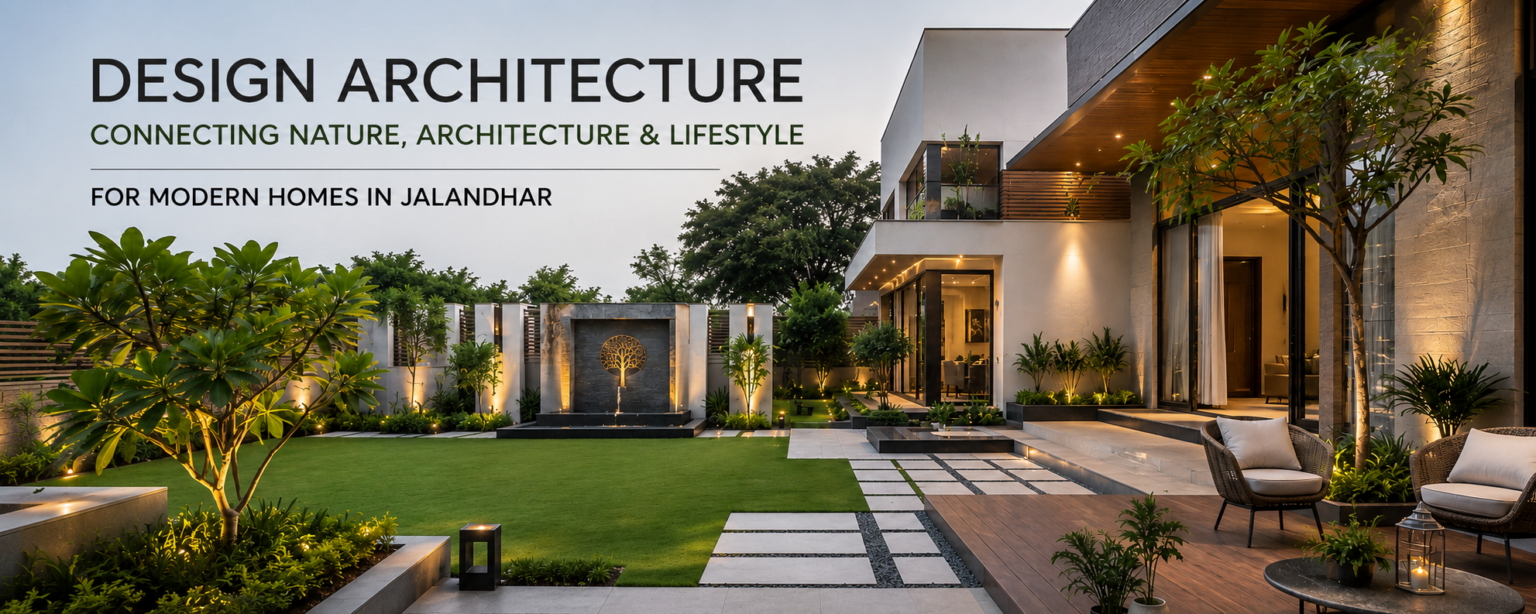
Landscape is not just the green area left after construction. It is a major part of how a home looks, feels, breathes and functions. Good landscape design architecture connects the built structure with nature. It decides how the entrance feels, how the garden works, how outdoor seating is placed, how sunlight enters, how privacy is created, and how the entire property feels from inside and outside.
For modern homes, villas, farmhouses, commercial spaces and hospitality projects, landscape planning should not be treated as decoration. It should be planned from the beginning, along with architecture and interiors.
This is especially important in cities like Jalandhar, where homeowners are now looking for better outdoor spaces, stronger elevations, open living areas, garden-facing rooms, terrace zones and climate-responsive design.
When people search for the top 10 architects in Jalandhar, they are usually not looking for someone who only creates a good-looking building. They are looking for an architect who can plan the complete experience of the space. Landscape design architecture plays a major role in that experience.
What Is Landscape Design Architecture?
Landscape design architecture is the planning of outdoor spaces in a way that supports the building, the site and the people using it.
It includes gardens, pathways, driveways, lawns, courtyards, terraces, decks, water features, outdoor seating, lighting, boundary walls, planting zones and open spaces.
But it is not only about adding plants.
It is about understanding how the built form and natural elements work together. A good landscape plan improves movement, privacy, comfort, views, ventilation and the overall character of the property.
For a residence, this could mean a private garden connected to the living room.
For a villa, it could mean a grand entrance driveway with layered planting.
For a hotel, it could mean outdoor seating that feels calm and premium.
For a commercial project, it could mean a landscape that improves the arrival experience.
Why Landscape Should Be Planned with Architecture
Many projects make one common mistake. The building is designed first, and the landscape is planned later.
This usually creates disconnected outdoor spaces.
The garden may not align with the rooms. The driveway may feel forced. The outdoor seating may not get the right shade. The plantation may block important views. The entry may look weak even if the building is well designed.
This is why landscape design architecture should begin during the main planning stage.
When the architect plans the structure and landscape together, the result feels more natural and complete. The entry, elevation, garden, windows, pathways and outdoor spaces all support one design language.
The Role of Landscape in Modern Homes
Modern homes are no longer only about indoor luxury. Outdoor living has become equally important.
Homeowners want spaces where they can sit, walk, host guests, spend time with family, enjoy greenery and feel connected to nature.
Landscape helps create this balance.
A well-planned garden can make the living room feel larger. A shaded courtyard can improve comfort. A terrace garden can make the upper floor more usable. A water feature can add calmness. A tree placed correctly can bring shade, privacy and character.
In luxury homes, the landscape also adds a sense of arrival. The way a person enters the property, moves through the driveway and reaches the main door creates the first impression.
Landscape Design Architecture and Climate
A good landscape is not only beautiful. It should respond to the climate.
In North Indian cities like Jalandhar, summers can be intense, winters can be cool, and outdoor comfort changes across seasons. Landscape planning should consider sun movement, shade, wind direction, water use and plant selection.
Trees can reduce heat.
Pergolas can create shaded seating.
Lawns can soften hard surfaces.
Water bodies can improve the feeling of calm.
Correct plantation can reduce dust and improve privacy.
This is where landscape design architecture becomes more technical. It is not about randomly placing greenery. It is about using landscape as a climate-responsive design layer.
Key Elements of Good Landscape Design Architecture
1. Entrance Planning
The entrance is the first experience of any property. A good landscape plan creates a clear and impressive arrival.
This can include a defined driveway, feature planting, lighting, paving patterns, boundary design and a balanced view of the façade.
For luxury residences, the entrance should feel intentional. It should guide movement naturally without looking overdone.
2. Pathways and Circulation
Outdoor circulation matters as much as indoor circulation.
Pathways should connect the entrance, garden, parking, outdoor seating, service areas and main building smoothly.
Poor circulation makes outdoor areas uncomfortable. Good circulation makes the entire site easier to use.
3. Garden Zoning
Every outdoor space should have a purpose.
A front lawn can create arrival impact.
A side garden can improve ventilation.
A backyard can become a private family zone.
A terrace can become an evening sit-out.
A courtyard can become the heart of the home.
Good zoning ensures that every part of the landscape is useful.
4. Outdoor Seating
Outdoor seating should be planned according to privacy, shade, views and access.
A seating area placed without thought may remain unused. But when it is connected to the living room, dining area, pool, garden or terrace, it becomes a natural extension of the home.
5. Plant Selection
Plants should be selected based on climate, maintenance, height, growth pattern and visual impact.
Not every beautiful plant is suitable for every site. Some need too much water. Some grow too large. Some block light. Some require high maintenance.
Good landscape design architecture uses plants with long-term thinking.
6. Lighting Design
Outdoor lighting improves safety, mood and visual depth.
Pathway lights, wall washers, garden lights, tree uplights and façade lighting can change how the property feels at night.
But lighting should be subtle. Overlighting can make a landscape look harsh and commercial.
7. Water and Drainage
A landscape must handle water properly.
Poor drainage can damage lawns, paving, basements, foundations and outdoor surfaces. Rainwater flow should be planned carefully, especially in larger residences and farmhouses.
This is one of the reasons landscape should be planned technically, not just visually.
Landscape and Interior Connection
The best homes create a strong connection between interiors and landscape.
Large windows, sliding doors, courtyards, balconies and garden-facing rooms can make the home feel open and peaceful.
For example, a bedroom with a private green view feels very different from a bedroom facing a blank wall. A living room connected to a lawn feels more spacious. A dining area opening into a courtyard feels more natural.
This connection has to be planned early.
If the building openings are not aligned with landscape zones, the final result may feel incomplete.
Landscape Design for Luxury Residences
In luxury residences, landscape is a major part of the overall experience.
It helps create scale, privacy, movement and emotional value.
A luxury home may include the following:
Grand entrance driveway
Formal garden
Poolside landscape
Outdoor lounge
Courtyard
Terrace garden
Water feature
Feature tree
Private bedroom garden
Outdoor dining space
Landscape lighting
But luxury landscape should not mean adding too many elements. It should feel controlled, balanced and suitable for the architecture.
The best result comes when the landscape supports the design instead of competing with it.
Landscape Design for Commercial and Hospitality Projects
Landscape is also important for commercial and hospitality spaces.
Hotels, cafés, resorts, offices and institutions use landscaping to create a better first impression and improve user experience.
For hospitality projects, outdoor spaces can become dining areas, waiting zones, event lawns or relaxation spaces.
For offices and institutions, landscape can improve entry movement, parking areas, break-out spaces and the overall campus environment.
In these projects, landscape design architecture must balance beauty, maintenance, durability and user flow.
Why Jalandhar Projects Need Better Landscape Planning
Jalandhar has a strong mix of residential, commercial, institutional and hospitality projects. Many homeowners and developers are now moving toward better-designed spaces rather than basic construction.
This makes landscape planning more important.
A well-designed outdoor space can improve the value of a property, make daily life better and create a stronger identity for the project.
When people search for the top 10 architects in Jalandhar, they should look for architects who understand site planning, outdoor spaces, climate, structure, interiors and execution together.
A building does not exist alone. It sits within a site. The way that site is planned decides how complete the project feels.
Common Landscape Mistakes to Avoid
Treating Landscape as the Last Step
Landscape should not begin after construction is complete. By then, many important decisions are already fixed.
Choosing Plants Only for Looks
Plants should be selected for climate, maintenance and long-term growth.
Ignoring Drainage
Beautiful landscapes can fail if water flow is not planned correctly.
Overcrowding the Space
Too many plants, lights, materials and features can make the landscape feel heavy.
Not Connecting Landscape with Interiors
Outdoor spaces should be visible and usable from inside the home.
How Space Race Architects Approach Landscape Design
Space Race Architects works with an integrated design approach where architecture, interiors and technical coordination are developed together from the beginning. The studio’s website also highlights landscape design as context-responsive planning that connects built form with its surroundings.
This approach is important because landscape cannot be separated from the building. The structure, views, movement, outdoor zones, materials and execution all need to align.
For residential, hospitality, institutional and workplace projects, this kind of planning helps create spaces that are not only visually strong but also practical and buildable.
Final Thoughts
Landscape design architecture is not an extra layer added to a project. It is a core part of good architecture.
It shapes the first impression, improves comfort, creates privacy, supports climate response and connects people with nature.
For homes, villas, hotels, offices and larger developments, the landscape should be planned with the same seriousness as the building itself.
If you are searching for the top 10 architects in Jalandhar, look beyond only façade design or interior finishes. Look for a team that understands the complete relationship between site, structure, interiors, landscape and execution.
That is where better architecture begins.